
A dental implant is a very small but strong post made of biocompatible metals, or ceramics, which is inserted into the jaw bone in place of the missing tooth root.
Dental Implant and Related Surgeries
What is a dental implant?
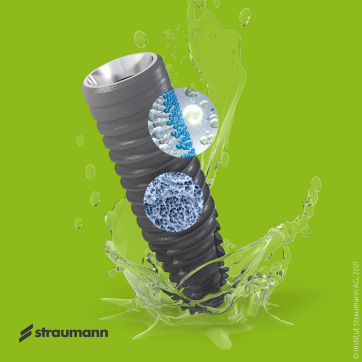
They merge with your body. A dental implant is simply an artificial root, which on healing, merges with the body and acts likes a natural one.
They maintain your smile Functionality and visual appearance go hand-in-hand: an implant borne restoration looks like a natural tooth – there is simply no visible difference, and special care is not required.
They preserve your facial structure In a healthy mouth, the tooth root transmits chewing forces to the jaw, and this helps to maintain the bone. If one or more teeth are lost, these forces cease and the bone may slowly recede. As a result, neighbouring teeth may also move inwards, creating additional gaps, as shown in the illustration below
FIELD OF INTERESTS
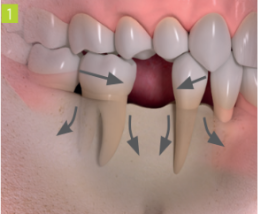
Fig 1: Initial situation
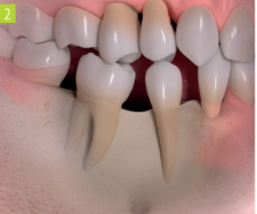
Fig 2: Long term bone recession
Fig. 3,4: Symbolic illustration of a deteriorated jawbone.
If you suffer from multiple tooth loss, bone atrophy and facial change may persist after conventional restorations, such as bridges or partial prosthesis. On the contrary, dental implant therapy can help to prevent the gradual bone deterioration described, as it mimics the original root, transmitting chewing forces to the bone.
Your teeth don’t have to be ground down with a conventional bridge, the healthy neighbouring teeth to the right and left of the missing tooth must be ground down to support the bridge. When using an implant to close the gap, the neighbouring teeth are not affected and the natural tooth substance remains intact.
Replacement of missing tooth and/or teeth with dental implants to restore functions and enhance esthetics
Single tooth gap
Fig 1: The dental implant replaces the missing tooth rot.
Two or more tooth gaps
Fig 2: The implants act as a support for the bridge.
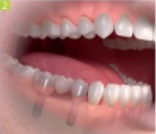
Fixed full-arch dental bridges
Fig 3: Missing teeth in either the upper or lower jaw can be replaced with a full-arch dental bridge supported by four or more dental implants.
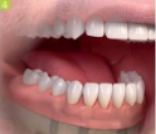
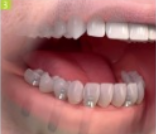
Removable Dentures
Fig 4: Removable implant-supported dentures can also provide a better fit and higher stability than conventional ones. The implants act as an anchor for the retentive components.
Bone Grafting for dental implants
SINUS LIFT ELEVATION
Following the loss of a premolar or molar, posterior maxilla bone height is often insufficient for implant placement.
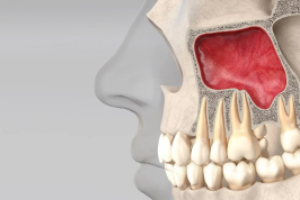
Sinus floor elevation creates more bone height, either via a transcrestal approach (Fig 1) or through a lateral window (Fig 2).
Augmentation can be conducted before implant placement (two-stage surgery) or simultaneously (single surgery). Posterior maxilla residual bone and sinus anatomy must be analysed before planning the technique and timing of implant placement.
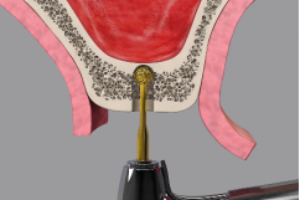
Fig 1: Transcrestal Sinus Lift
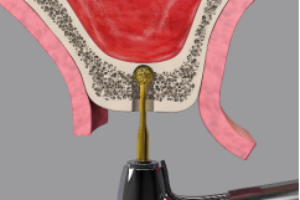
Fig 2: Lateral window sinus lift
MINOR BONE AUGMENTATION
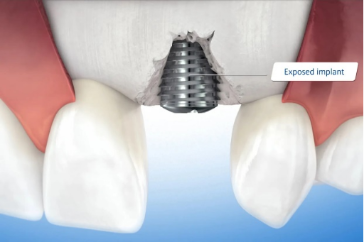
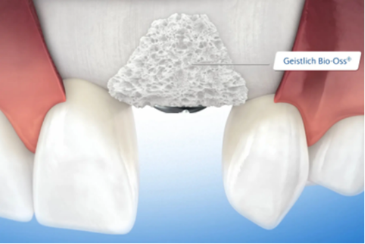
Guided bone regeneration (GBR) is a surgical procedure that uses grafting materials and barrier membranes to stimulate and direct the growth of new bone at defect sites.
Autologous bone, and/or a biomaterial, is placed into a bone deficient area, maintaining space and stimulating formation of new bone. Barrier membranes covering the filled defect prevent the ingrowth of soft tissue.
GBR approaches are used, for example, to restore bone in case of fenestration or dehiscence defects around an implant, to compensate for major jawbone deficiencies or to avoid bone resorption after tooth extraction in deficient alveoli.
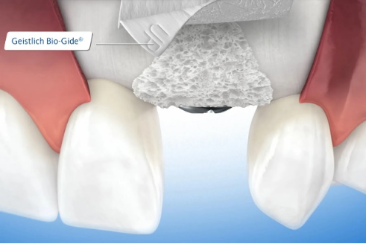
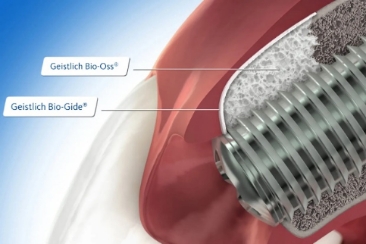
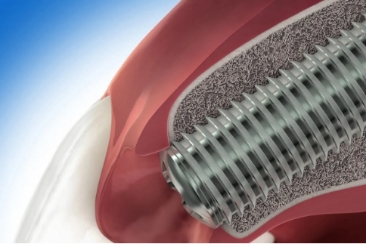
MAJOR BONE AUGMENTATION
Tooth loss, trauma or tumour resection can lead to large bone deficiencies in the alveolar ridge. Reconstructive measures are indicated to augment poor bone quantity.
Autogenous bone blocks harvested from the lower jaw or the iliac crest are the prevailing material used to reconstruct larger ridge defects. However, autogenous bone blocks are subject to a certain degree of resorption.
EXTRACTION SOCKET MANAGEMENT
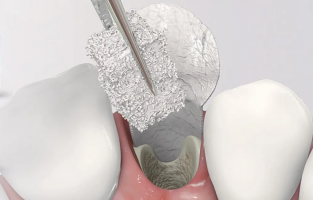
It prevent horizontal and vertical volume loss even in sites with thin buccal bone walls optimize the bone and soft-tissue situation irrespective of the chosen time for implantation improve the aesthetic outcome by preserving the alveolar ridge volume and contour under pontics
SOFT-TISSUE REGENERATION
Soft-Tissue Regeneration plays an increasingly important role in periodontology as well as oral and maxillofacial surgery. Several studies have shown that soft tissue volume and quality not only play a role in aesthetics, but they are also important for oral health in many respects.
The standard material for soft tissue regeneration is autologous free gingival grafts and connective tissue grafts. However, harvesting those grafts, usually from the palate, is painful, technically demanding, time consuming and may lead to complications such as bleeding, pain, swelling, and occasionally also numbness or infections.